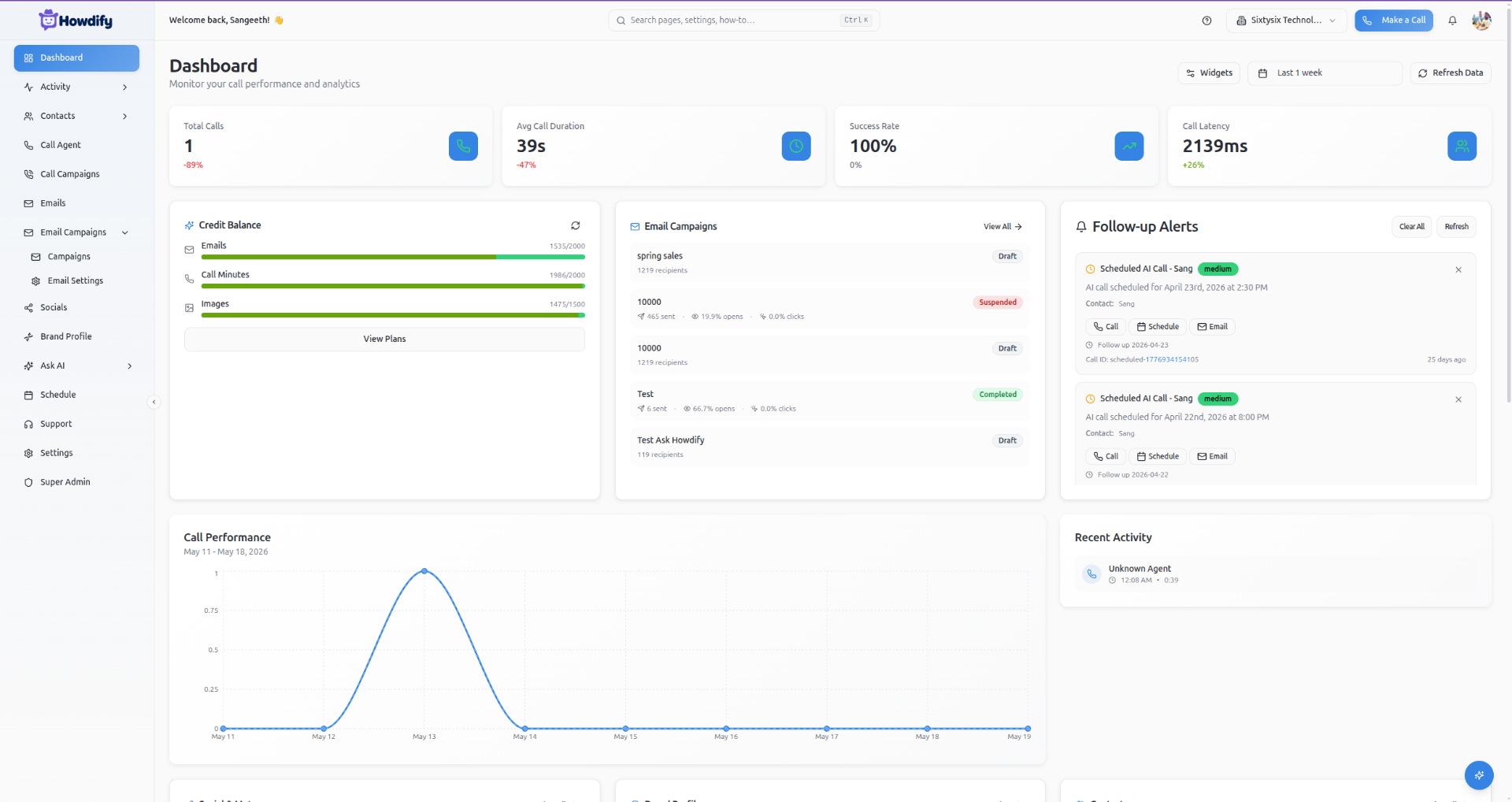
Howdify started as an internal tool. It grew into a full SaaS platform that replaces half a dozen subscriptions for the businesses that use it.
The project
Every small and mid-size business we worked with was juggling the same stack — one tool for email, another for CRM, a third for calling, a fourth for scheduling. Each one billed separately. None of them talked to each other cleanly.
We knew how to build software. We had a clear picture of what was missing. So we built Howdify — a single platform that handles all of it, with AI baked in from the start, priced on usage instead of contact count.
Building it also proved something important: we don't just bolt AI onto existing workflows. We design systems where AI is a first-class feature, not an afterthought.
What we built
This was the hardest part to get right. We built an AI voice agent that handles outbound campaigns and inbound calls — it qualifies leads, books appointments, and follows up, around the clock. We dogfooded this extensively before shipping it to customers.
We deliberately priced this differently from everyone else — unlimited contacts on every plan, pay for what you use. The data model is built to be fast at scale, with AI surfacing follow-up priorities rather than leaving that to the user.
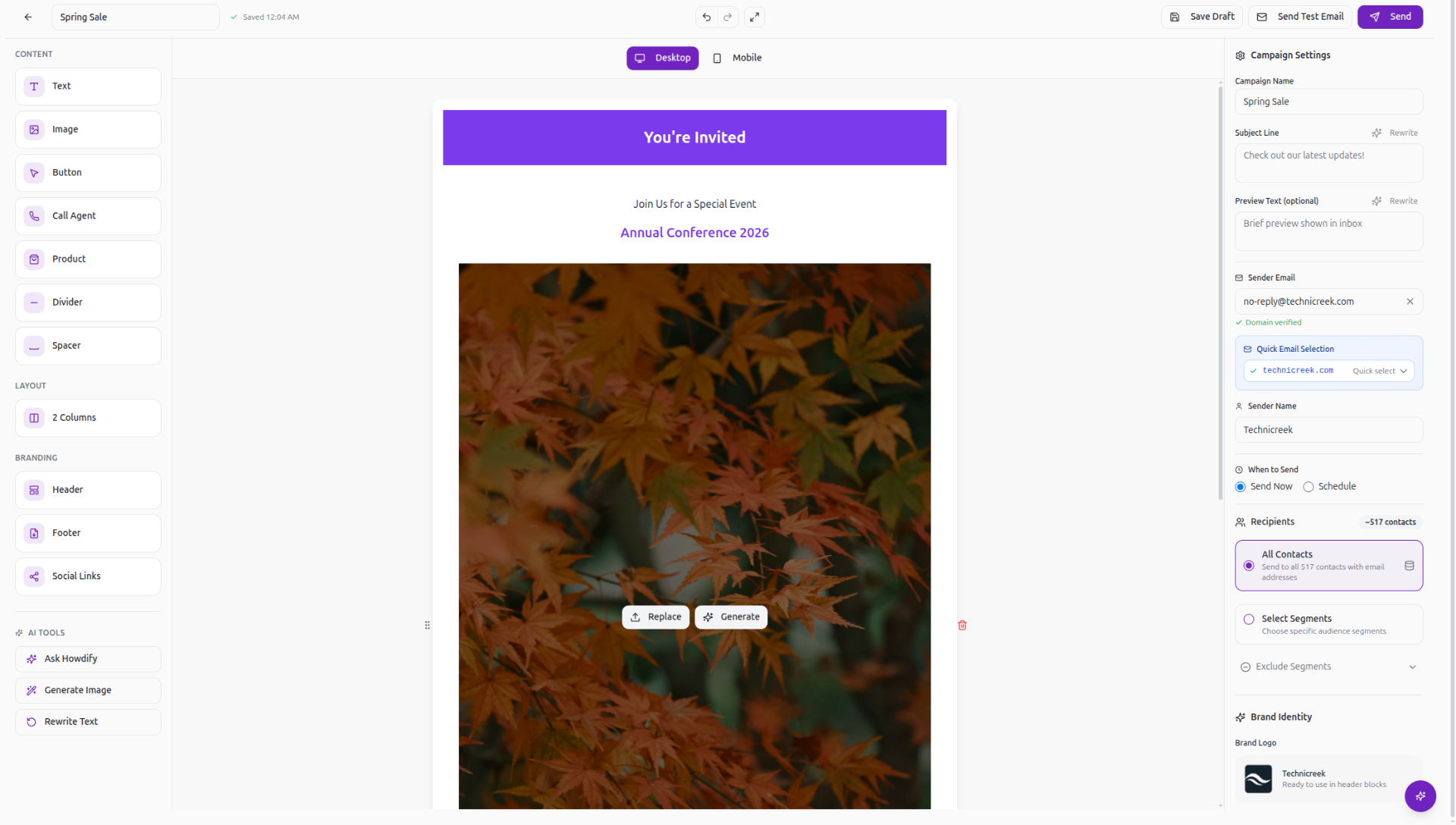
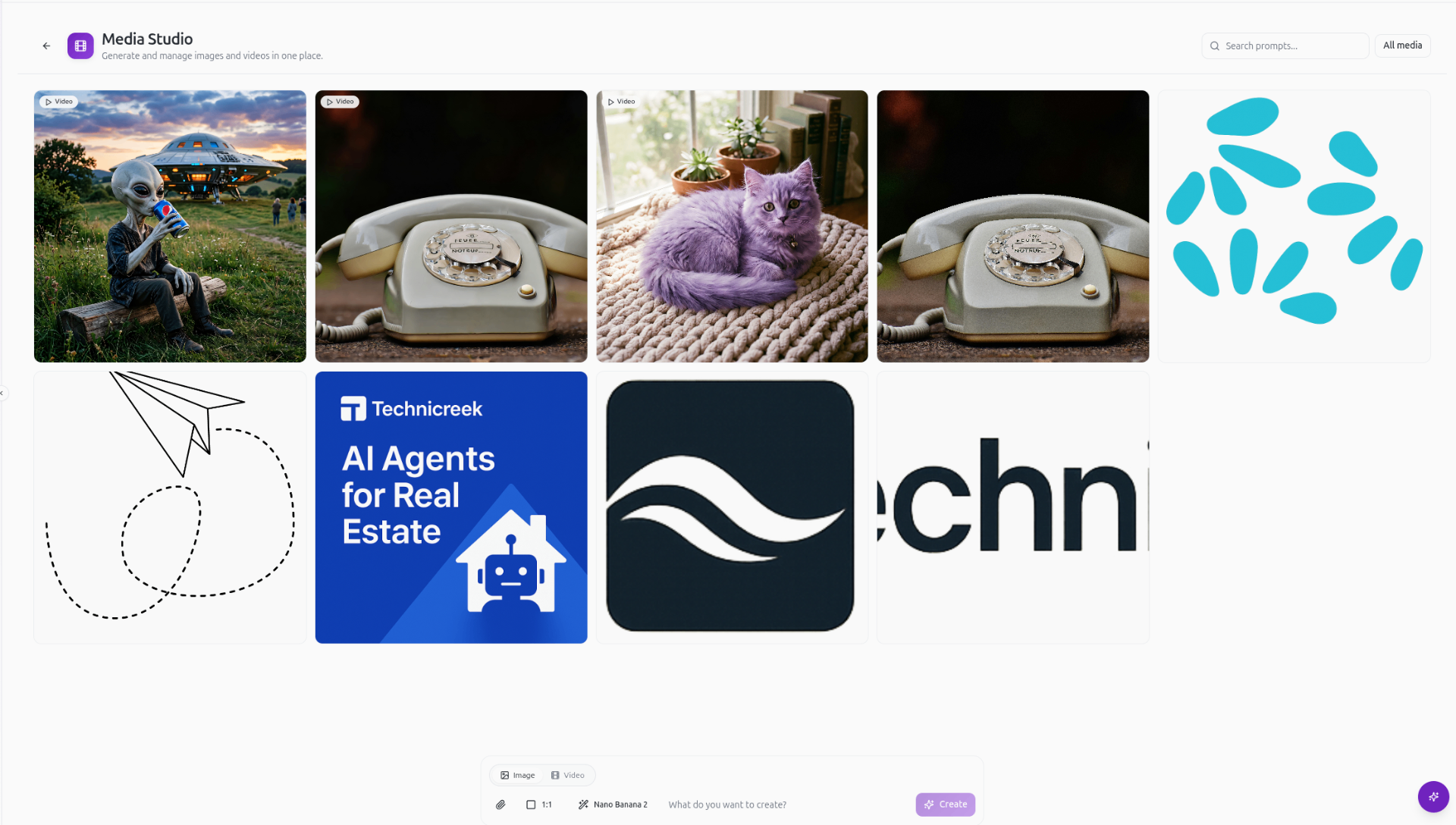
A drag-and-drop email builder with AI copy generation built in. We wrote the AI prompts ourselves based on what actually converts — not generic marketing language.
Store connections, order follow-ups, abandoned cart sequences — tied directly into the CRM so every customer interaction has context.
Native scheduling that connects to the AI caller — so a bot can book a meeting in real time during a call, without a human ever touching it.
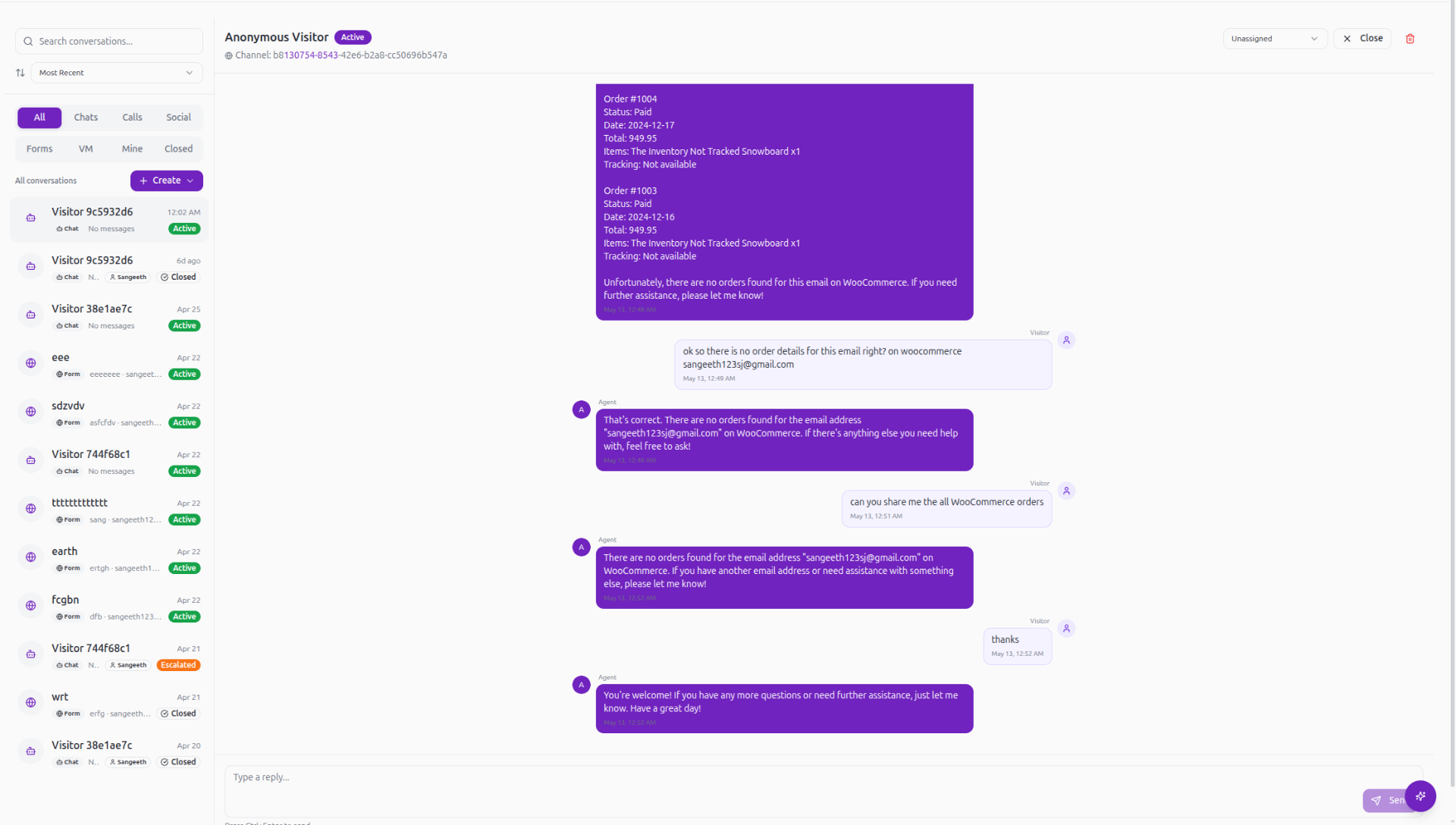
A single view of everything happening across every channel — calls, emails, form fills, purchases. We built this so nothing falls through the cracks.
Inside the platform
What building this taught us
Howdify is live, has paying customers, and gets iterated on constantly. That means we feel every architectural decision we made — the good ones and the ones we'd change.
When we work on a client project now, we bring that experience. We know what breaks at scale. We know which abstractions are worth the investment and which ones slow you down. We know how to build something that doesn't become a maintenance nightmare six months post-launch.
Most dev shops have never shipped their own product. We have.
We've shipped our own software. We know what it takes. Tell us what you're building and we'll be straight about how to get there.